Description
Buy Authentic Melanotan II 10 Mg Online
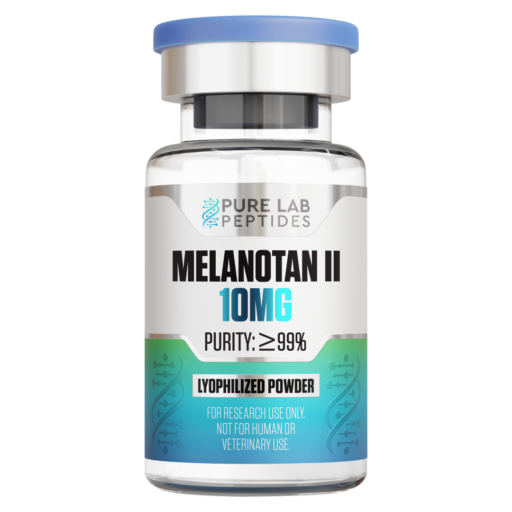
Melanotan II 10mg is a research-use-only laboratory material supplied for controlled research workflows, compound characterization, and analytical documentation review. It is manufactured under rigorous quality standards to support consistency, traceability, and batch-specific verification for qualified laboratory settings.
What Melanotan II 10mg is
Melanotan II is a synthetic cyclic peptide analog of alpha-melanocyte stimulating hormone, alpha-MSH. It was developed at the University of Arizona in the 1990s for research into pigmentation. The “10mg” is the amount of lyophilized powder per vial. It’s sold strictly as a research peptide for laboratory studies, not for human or veterinary use.
Key Product Details Of Melanotan II 10Mg
- Manufactured in accordance with rigorous quality standards to support ≥99% purity, as reflected in batch-specific documentation where available.
- Every batch is third-party analyzed for identity, assay/potency, and sterility documentation where applicable.
- Supplied in lyophilized powder form to help preserve stability throughout transport and storage.
- Produced with lot-level traceability to support research documentation and laboratory recordkeeping.
Research Documentation Context
- Supports compound characterization in controlled laboratory settings.
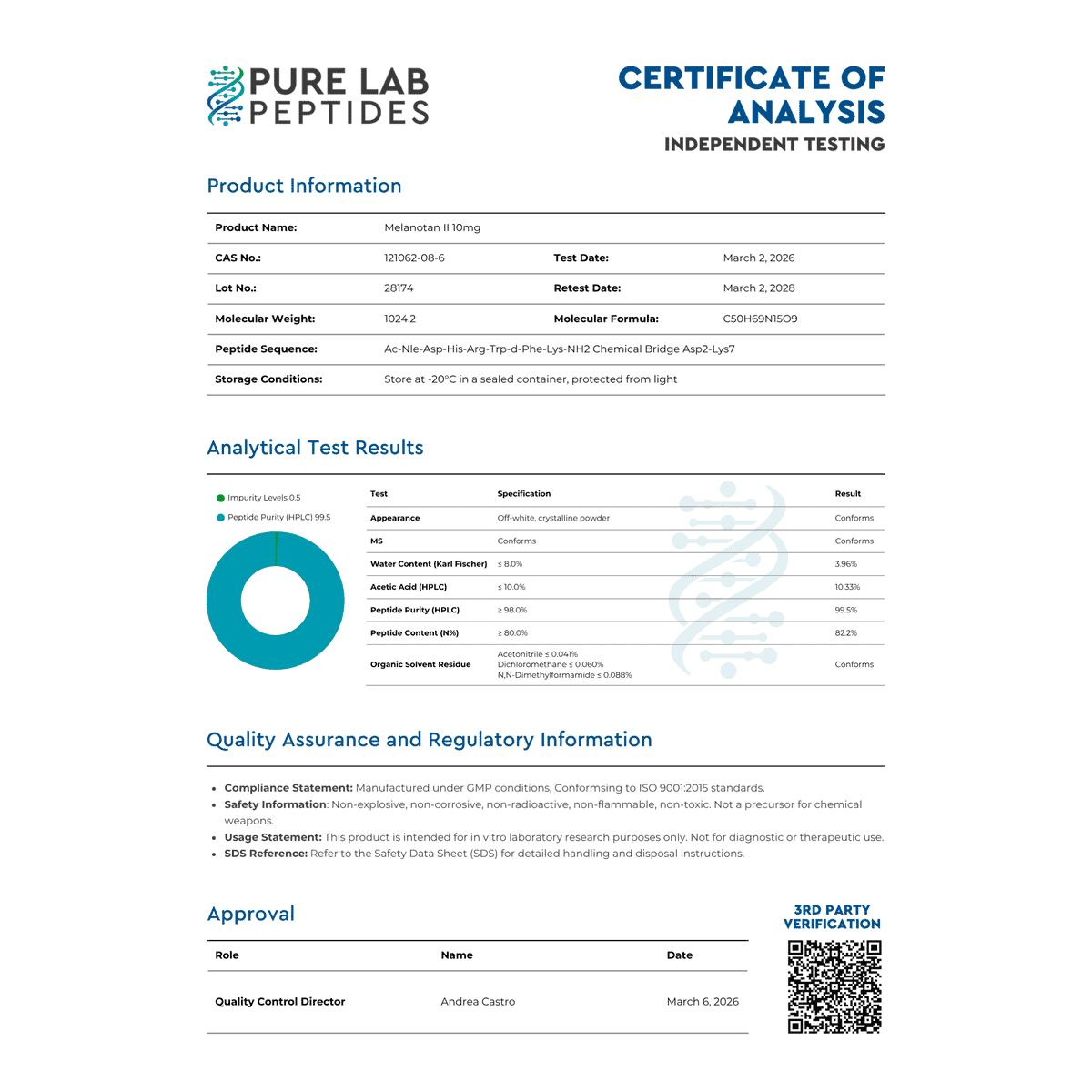
- Provides batch-specific identity and purity documentation for research review.
- Allows lot-level traceability across laboratory documentation workflows.
- Supports comparison of product labeling, analytical documentation, and storage information during research planning.
- Supports analytical review of receptor-pathway research materials within a strictly laboratory-focused context.
Specifications and Documentation
- Certificate of Analysis: Available with batch-specific documentation where applicable.
- Product Form: Lyophilized powder.
- Purity Specification: ≥99% purity.
- Intended Use: Laboratory research use only.
Melanotan II 10mg is intended strictly for laboratory research use only. This product is not intended for human or animal consumption, therapeutic use, diagnostic use, clinical use, veterinary use, or as a food, drug, cosmetic, dietary supplement, or household product.
How researchers study it
In preclinical models, Melanotan II is used to investigate melanocortin receptors, mainly MC1R, MC3R, MC4R, and MC5R. MC1R is involved in melanin production in skin cells. MC4R in the hypothalamus is studied for appetite and sexual arousal pathways. Labs use it to study pigmentation signaling, energy balance models, and central melanocortin pathways in animals.
Why it gets research attention
Melanotan II gained notice because it non-selectively activates multiple melanocortin receptors. Early animal studies looked at tanning response, appetite suppression, and spontaneous arousal effects. Those off-target CNS effects led to separate research compounds like PT-141 for sexual function. It remains a tool for studying how broad melanocortin activation affects different tissues.
Form, purity & handling
Melanotan II 10mg is typically supplied as a white, freeze-dried powder in a sealed sterile vial. Reputable suppliers include a Certificate of Analysis with HPLC and mass spec to confirm sequence and purity, usually >95% for research grade. Like other peptides, it degrades with heat, light, and moisture, so it’s shipped cold and stored at -20°C or -80°C after reconstitution.
Legal + safety status
Melanotan II is not FDA-approved or approved by other major regulatory agencies for medical or cosmetic use. It’s classified “for research use only, not for human consumption.” Multiple health authorities have issued warnings about unapproved Melanotan products due to lack of safety data, manufacturing controls, and reported adverse events. It’s also banned by WADA for athletes.
Bottom line
*Melanotan II 10mg* is a research tool used to study melanocortin receptors and pigmentation biology in the lab. While it was studied decades ago for tanning, it never completed clinical development or gained approval. It has no established human dose, safety profile, or pharmaceutical quality standards. For skin protection or pigmentation concerns, talk to a licensed dermatologist about FDA-approved, evidence-based options like sunscreen and supervised therapies.