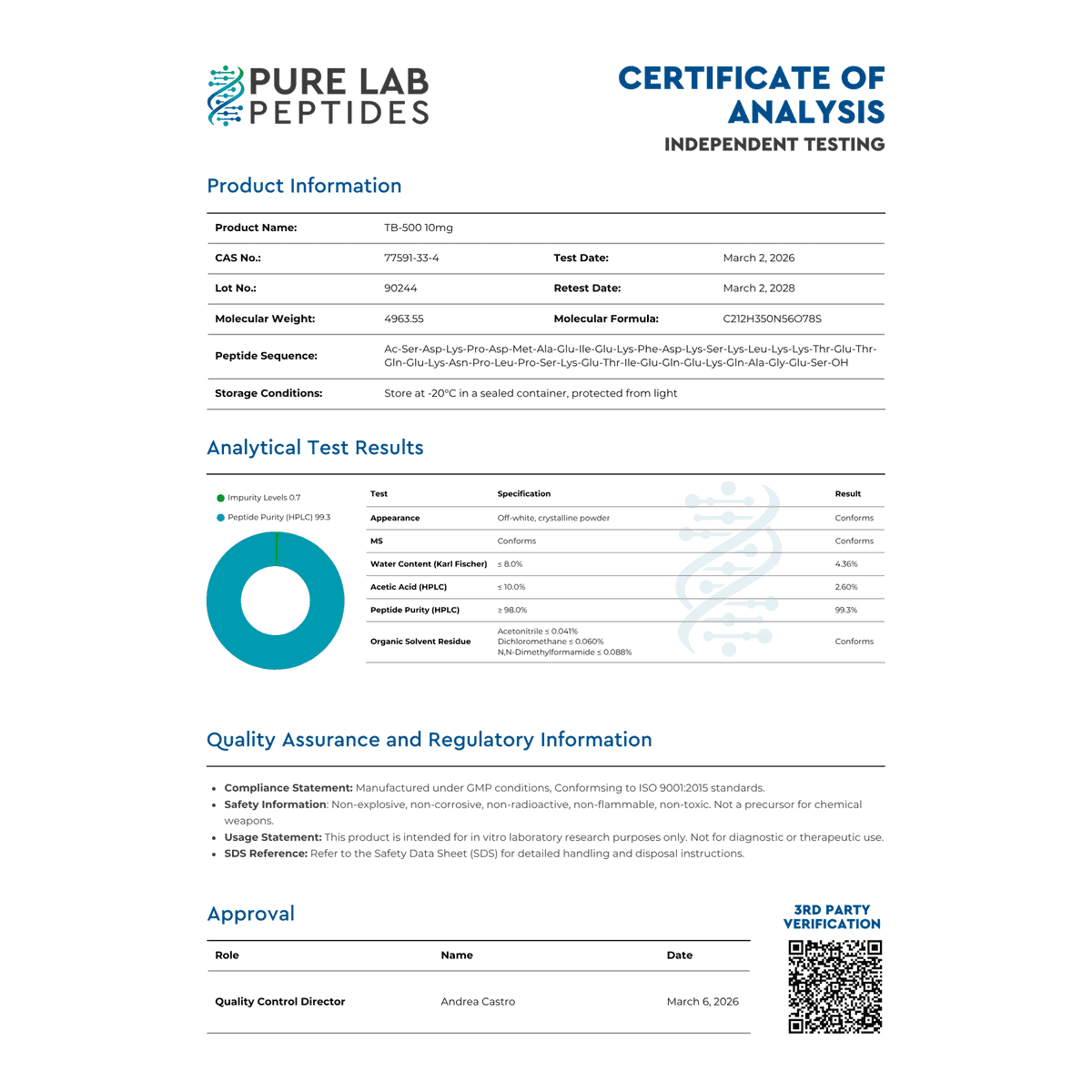
Description
Buy Authentic TB-500 10 mg Online
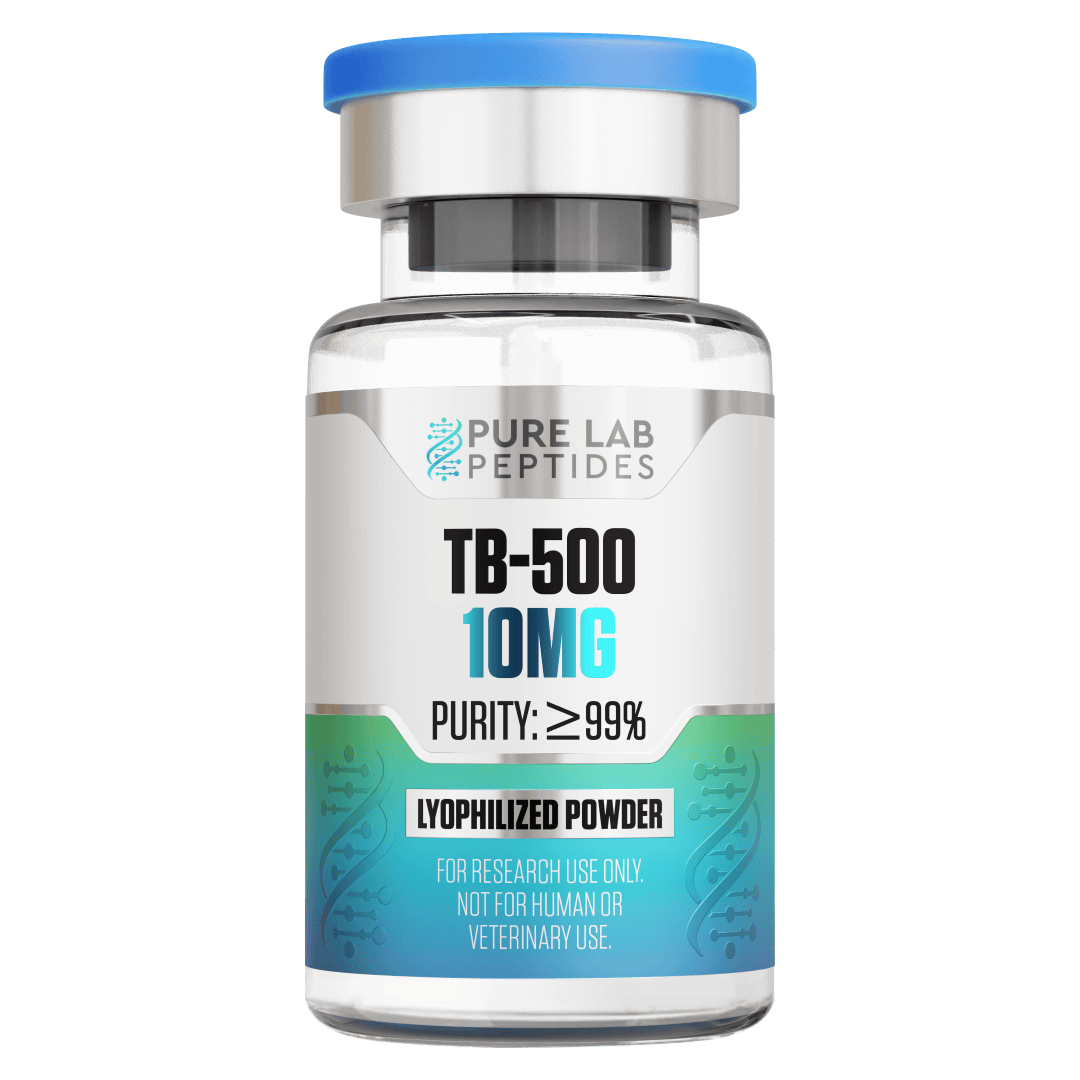
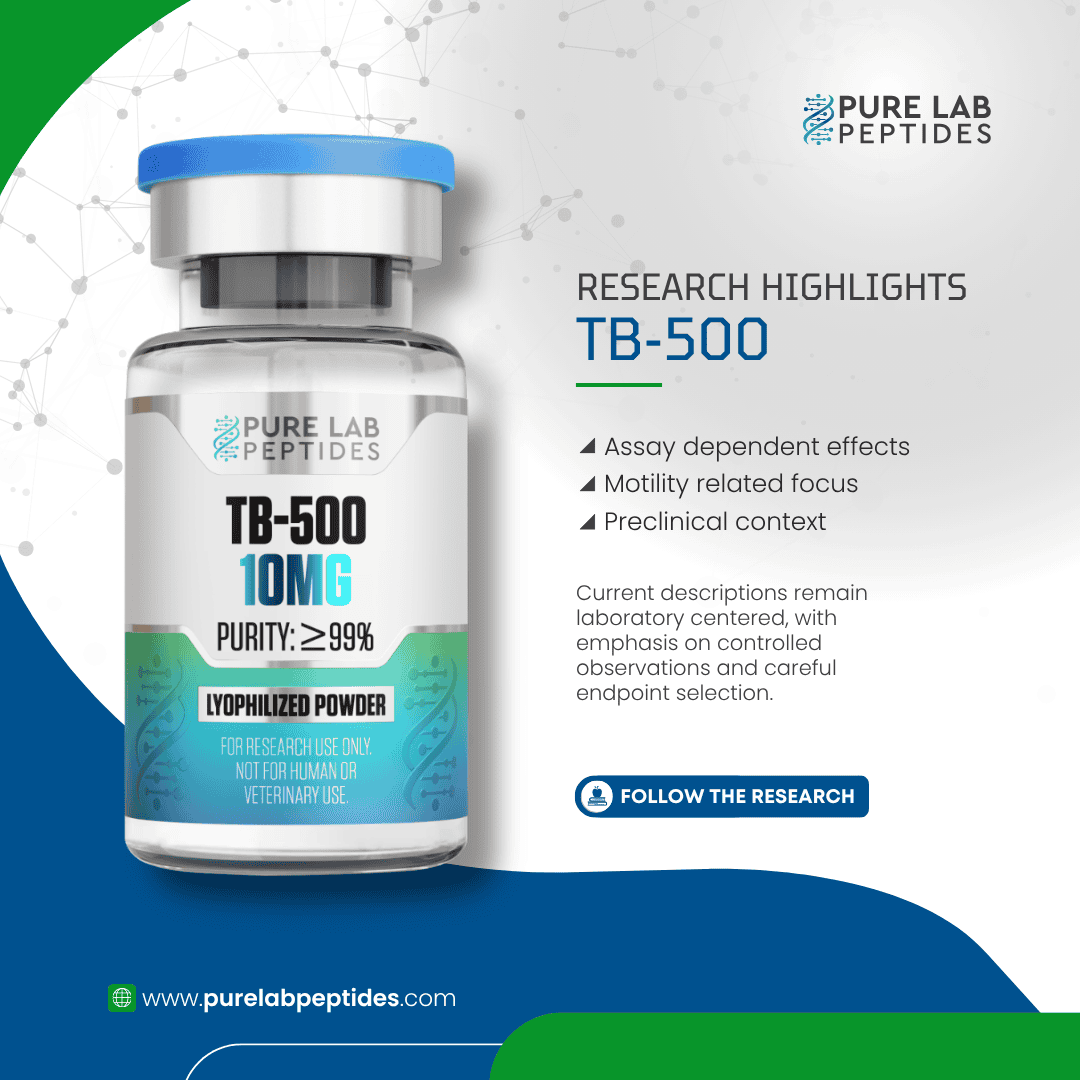
TB-500 10mg is a research-use-only laboratory material supplied for controlled research workflows, compound characterization, and analytical documentation review. It is manufactured under rigorous quality standards to support consistency, traceability, and batch-specific verification for qualified laboratory settings.
What TB-500 10mg is
TB-500 is the research name for a synthetic version of thymosin beta-4’s active region, specifically amino acids 17-23. Thymosin beta-4 is a protein found in nearly all human and animal cells. The “10mg” is the amount of lyophilized powder per vial. It’s sold strictly as a research peptide for laboratory studies, not for human or veterinary use.
Key Product Details Of TB-500 10mg
- Manufactured in accordance with rigorous quality standards to support ≥99% purity, as reflected in batch-specific documentation where available.
- Every batch is third-party analyzed for identity, assay/potency, and sterility documentation where applicable.
- Supplied in lyophilized powder form to help preserve stability throughout transport and storage.
- Produced with lot-level traceability to support research documentation and laboratory recordkeeping.
Research Documentation Context
- Supports compound characterization in controlled laboratory settings.
- Provides batch-specific identity and purity documentation for research review.
- Allows lot-level traceability across laboratory documentation workflows.
- Supports comparison of product labeling, analytical documentation, and storage information during research planning.
- Supports analytical review of peptide research materials within a strictly laboratory-focused context.
Specifications and Documentation
- Certificate of Analysis: Available with batch-specific documentation where applicable.
- Material Safety Data Sheet: Coming Soon.
- Handling and Storage Instructions: Coming Soon.
- Product Form: Lyophilized powder.
- Purity Specification: ≥99% purity.
- Intended Use: Laboratory research use only.
TB-500 10mg is intended strictly for laboratory research use only. This product is not intended for human or animal consumption, therapeutic use, diagnostic use, clinical use, veterinary use, or as a food, drug, cosmetic, dietary supplement, or household product.
How researchers study it
In preclinical cell and animal models, TB-500 is used to investigate actin regulation, cell migration, and tissue repair pathways. Thymosin beta-4 binds actin, a key protein in cell structure and movement. So labs use TB-500 to study wound healing, angiogenesis, inflammation response, and cell survival under stress in controlled experiments.
Why it gets research attention
Most interest comes from animal model data on corneal, cardiac, dermal, and muscle tissue. Studies look at blood vessel formation, reduced inflammation, and cell migration into damaged areas. It’s also used to study recovery models for tendons, ligaments, and skin. All current evidence is preclinical — no large human trials or FDA approval exist.
Form, purity & handling
TB-500 10mg is typically supplied as a white, freeze-dried powder in a sealed sterile vial. Reputable suppliers include a Certificate of Analysis with HPLC and mass spec data confirming sequence and purity, usually >95% for research grade. Peptides degrade with heat, light, and moisture, so it’s shipped cold and stored at -20°C or -80°C after reconstitution.
Legal + safety status
TB-500 is not approved by the FDA or other regulatory agencies for medical use. It’s classified “for research use only, not for human consumption.” It’s also banned by WADA for athletes in competition. Because it lacks human safety data, established dosing, or pharmaceutical-grade manufacturing, it should only be handled in licensed research labs under proper protocols.
Bottom line
*TB-500 (10mg)* is a research tool used to study actin-mediated cell migration and tissue repair in the lab. The 5mg size is common for small-scale experiments. While thymosin beta-4 biology is real, TB-500 itself has no approved medical use or human safety profile. For tissue injury or recovery, talk to a licensed healthcare provider about evidence-based treatments with clinical data.