
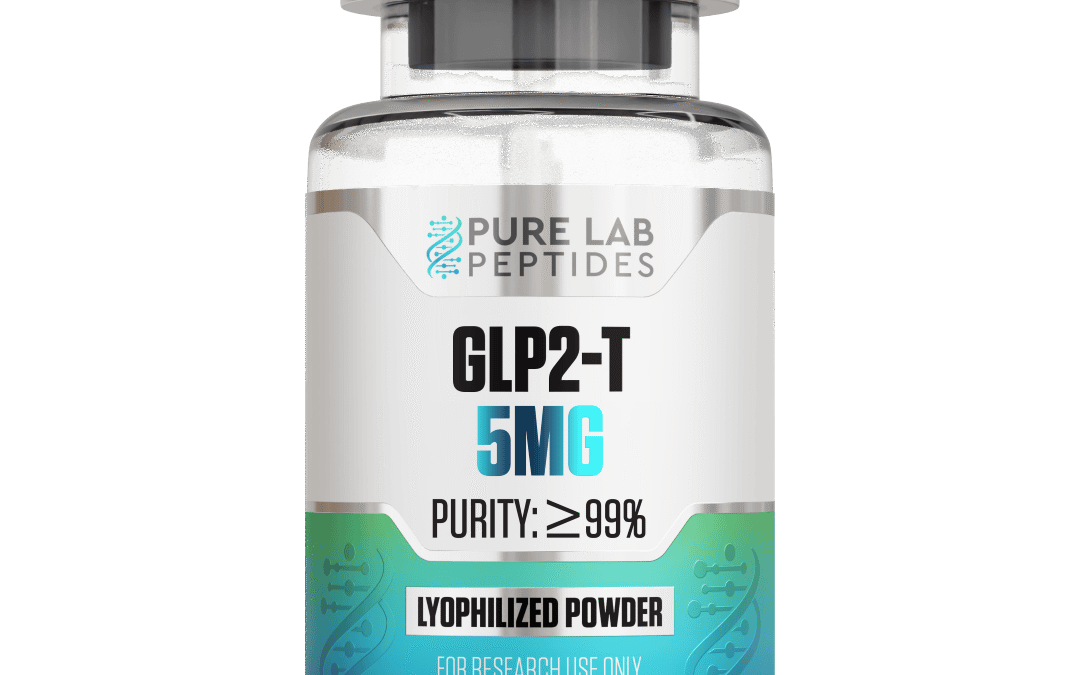
Buy GLP-2-T (5mg) Online
What GLP-2-T 5mg is;
GLP-2-T is a synthetic peptide based on glucagon-like peptide-2. The “T” usually means it’s a truncated or modified analog designed for increased stability vs natural GLP-2. The “5mg” refers to the amount of lyophilized powder per vial. In research settings it’s used to study intestinal biology and nutrient absorption, not for human use.
How GLP-2-T works in research
Natural GLP-2 is released by intestinal cells and helps maintain the gut lining. GLP-2-T analogs are studied for how they bind GLP-2 receptors to support mucosal growth, improve barrier function, and slow intestinal transit. Researchers use it in cell and animal models to understand gut repair mechanisms and nutrient uptake pathways.
Why researchers study GLP-2-T
The main focus is intestinal health. Because GLP-2 receptors are mostly in the gut, GLP-2-T is used in lab studies on mucosal integrity, cell proliferation, and reducing inflammation in intestinal tissue models. Some studies also look at its effect on absorption of nutrients and fluids. All data comes from controlled preclinical research.
Form & handling
GLP-2-T 5mg is typically supplied as a white, freeze-dried powder in a sterile sealed vial. For lab use it gets reconstituted with sterile bacteriostatic water to a working concentration. Peptides degrade with heat, light, and moisture, so suppliers ship cold and recommend refrigeration after reconstitution. A Certificate of Analysis with HPLC/MS data is standard for verifying purity.
Legal + safety status
GLP-2-T is a research peptide. It is not approved by the FDA or other regulatory agencies for medical use, and it’s not available by prescription. Vials sold online are labeled “for research use only, not for human consumption.” That means it’s intended for licensed labs doing in-vitro or animal studies under proper protocols.
Bottom line
*GLP-2-T 5mg* is a tool compound for gut biology research. It helps scientists study how GLP-2 receptor activation affects intestinal tissue in controlled settings. Because it’s unapproved for humans, there’s no established safe dose or safety profile for people. Anyone working with it should follow lab safety rules, use proper PPE, and treat it strictly as a research chemical.